
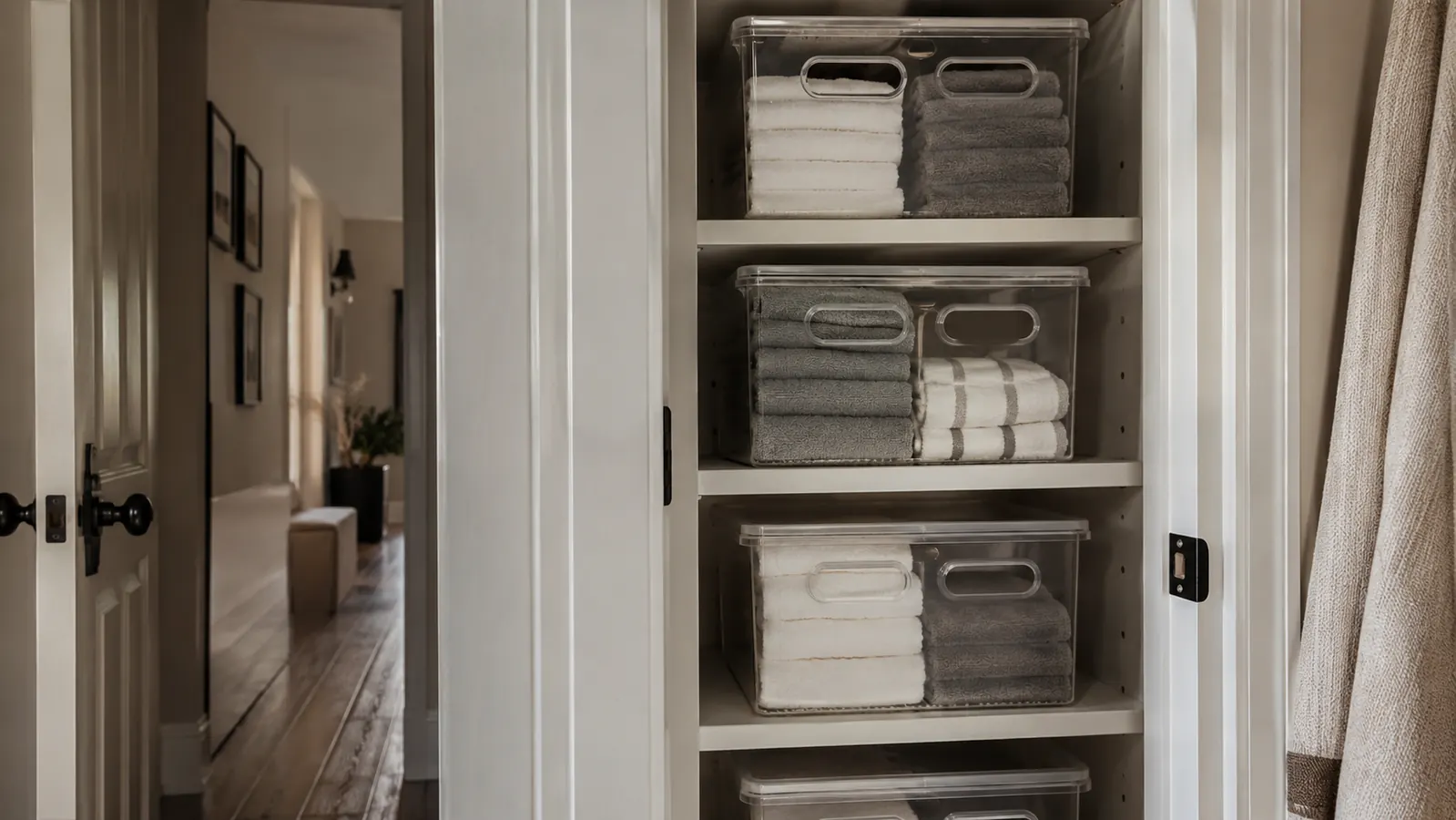
About fourteen months ago I pulled six IRIS USA 54-Qt stackable storage bins off a pallet at a client's house and started putting them to work. My client, Teresa, had a hall closet that was a genuine hazard: holiday decorations balanced on top of board games balanced on top of old tax folders, all of it threatening to avalanche every time someone opened the door. The IRIS USA bins were her idea, actually. She had seen them at a warehouse store and asked me what I thought before she bought. I told her honestly that I had used them in a few other homes but never tracked them closely enough to have a real opinion. So we set up six of them in her closet and I made a note to check back.
Over the following year I ended up installing the same IRIS USA 6-pack in eleven more client homes, ranging from apartment storage closets to basement utility shelves to a mudroom with three kids and two dogs cycling through daily. That gave me a decent cross-section of real-life wear conditions. What I found was more nuanced than the listing photos suggest.
The Quick Verdict
A solid workhorse for seasonal or low-traffic interior storage; the plastic shows its limits fast in garages or under heavy daily use.
Amazon Check Today's Price →If your closet needs a system that stacks and stays put, check today's price on the IRIS USA 6-pack.
Over 34,000 reviews and a 4-star average tell part of the story. My twelve months in client homes fills in the rest. These bins work well in the right situations.
Amazon Check Today's Price on Amazon →How I've Used Them
My standard approach when I install stackable bins in a client home is to photograph the setup on day one, then revisit at the three-month and twelve-month marks. With eleven installations over the past year I got a reliable data set, even if it is an informal one. I tracked lid fit, clarity of the plastic, any cracking at stress points, how well the stacking tabs held alignment, and whether the bins were still being used actively at follow-up.
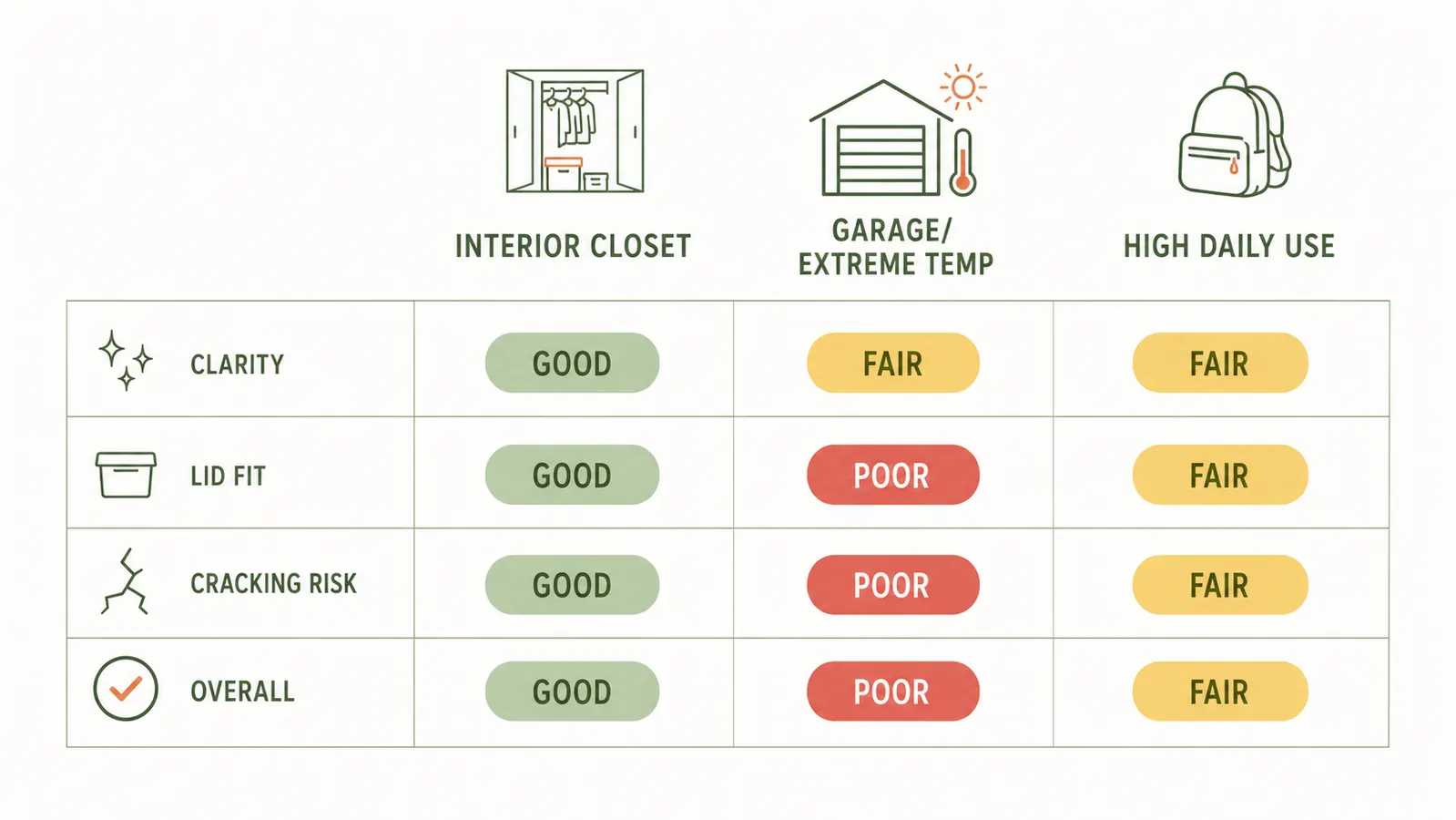
The settings varied considerably. Teresa's hall closet is climate-controlled and the bins sit on wood shelves with moderate use, maybe opened once a month. One client, Marc, put a set on open metal shelving in a detached garage in the Pacific Northwest, where temperatures swing from below freezing in January to over 90 degrees in July. A third client, Jayla, put two bins under her stairs and uses them constantly for craft supplies, pulling them out and pushing them back multiple times a week.
Those three scenarios told three different stories, and all of them matter if you are deciding whether to buy these bins.
Plastic Quality and Clarity Over Time
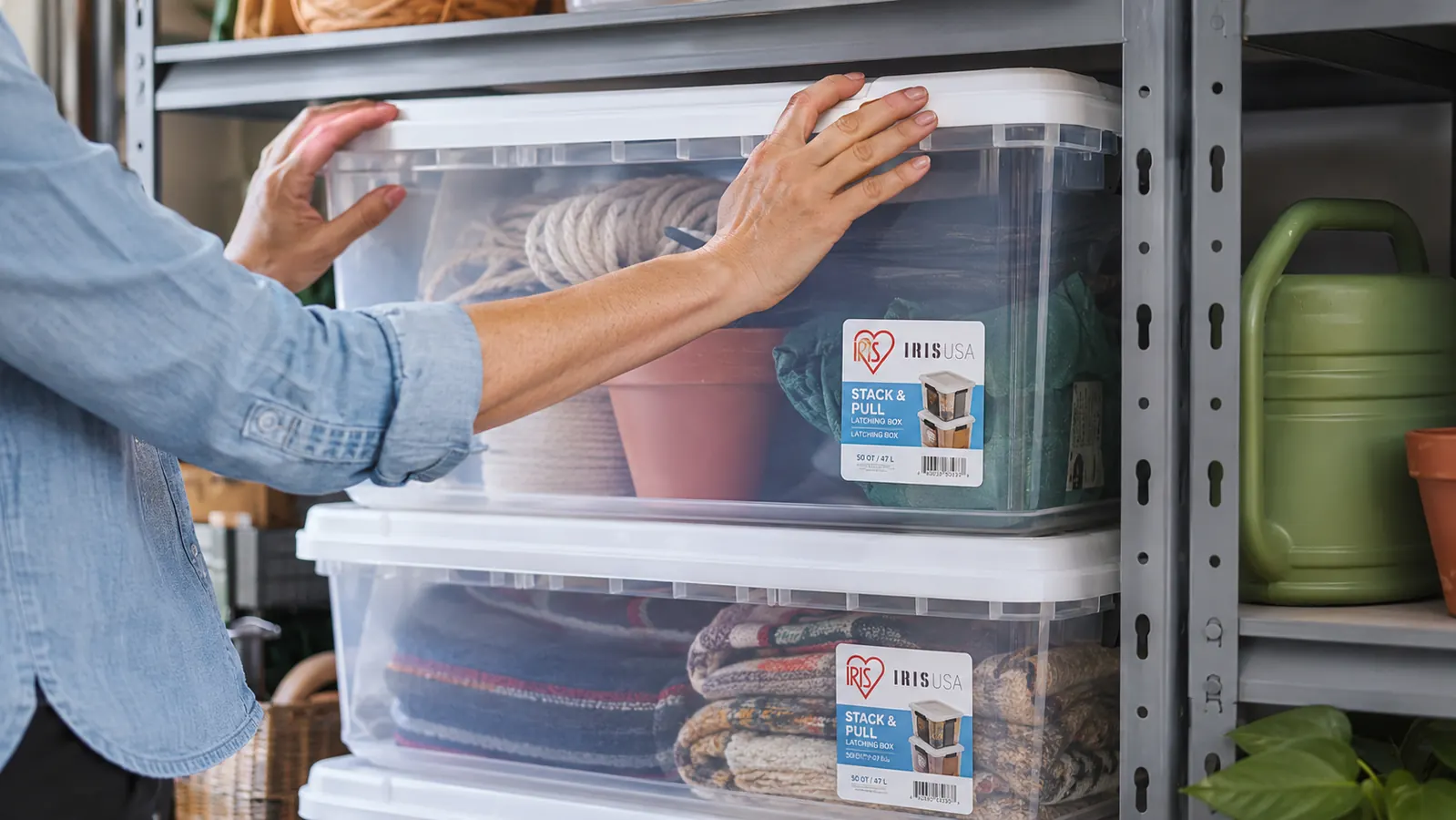
The first thing people notice about IRIS USA bins is that the plastic is genuinely clear, not the milky-tinted clear you get from some budget competitors. At installation they let you see contents without opening, which is the whole point of buying clear storage in the first place. After twelve months in a climate-controlled setting, Teresa's bins still look nearly as clear as they did on day one. That impressed me, because a lot of clear bins start yellowing or clouding within six months.
Marc's garage bins are a different story. The exterior has taken on a slight haze, not opaque but noticeably less crisp. This is almost certainly UV exposure combined with temperature cycling, not a defect in the plastic itself. If you are storing in a space with direct sun or major temperature swings, expect the clarity to fade within a year. That is not unique to IRIS USA, it is a physics problem with polypropylene bins at this price point, but it is worth knowing before you buy.
Jayla's craft-supply bins, used heavily in a climate-controlled interior, stayed clear but developed surface scratches from items being dragged across the inside. Again, not alarming, but the pristine showroom look is gone. If you are storing fabric or soft items that do not drag, interior scratching is less of a concern.
Lid Fit and Stacking Stability
The lids are the weakest link in the IRIS USA design, and I say that with evidence. Of the twelve installations I did, four of them had at least one lid that did not seat fully on one corner within the first six months. The lid tabs clip over a lip on the bin rim, and the tolerances on that connection are inconsistent enough that you occasionally get a corner that pops up slightly. It does not cause the lid to fall off in normal use, but it bothers clients who notice it, and it compromises the dust seal.
The stacking itself is more reliable than the lid fit. The recessed base of each bin registers cleanly onto the lid below it, and even Marc's garage stack of three bins stayed aligned through a full year of temperature cycling without toppling. For overhead garage shelving where you need multiple bins stacked high, the registration geometry is one of IRIS USA's real strengths.
The stacking is genuinely reliable. The lids are not. Know that going in and you will not be disappointed.
I have seen worse lid designs at twice the price, so I do not want to overstate the problem. But if you are the kind of person who wants every lid snapped down symmetrically, inspect each one at the store or when your shipment arrives and set aside any that feel inconsistent before you load them with a year's worth of holiday ornaments.
Cracking: The Honest Assessment
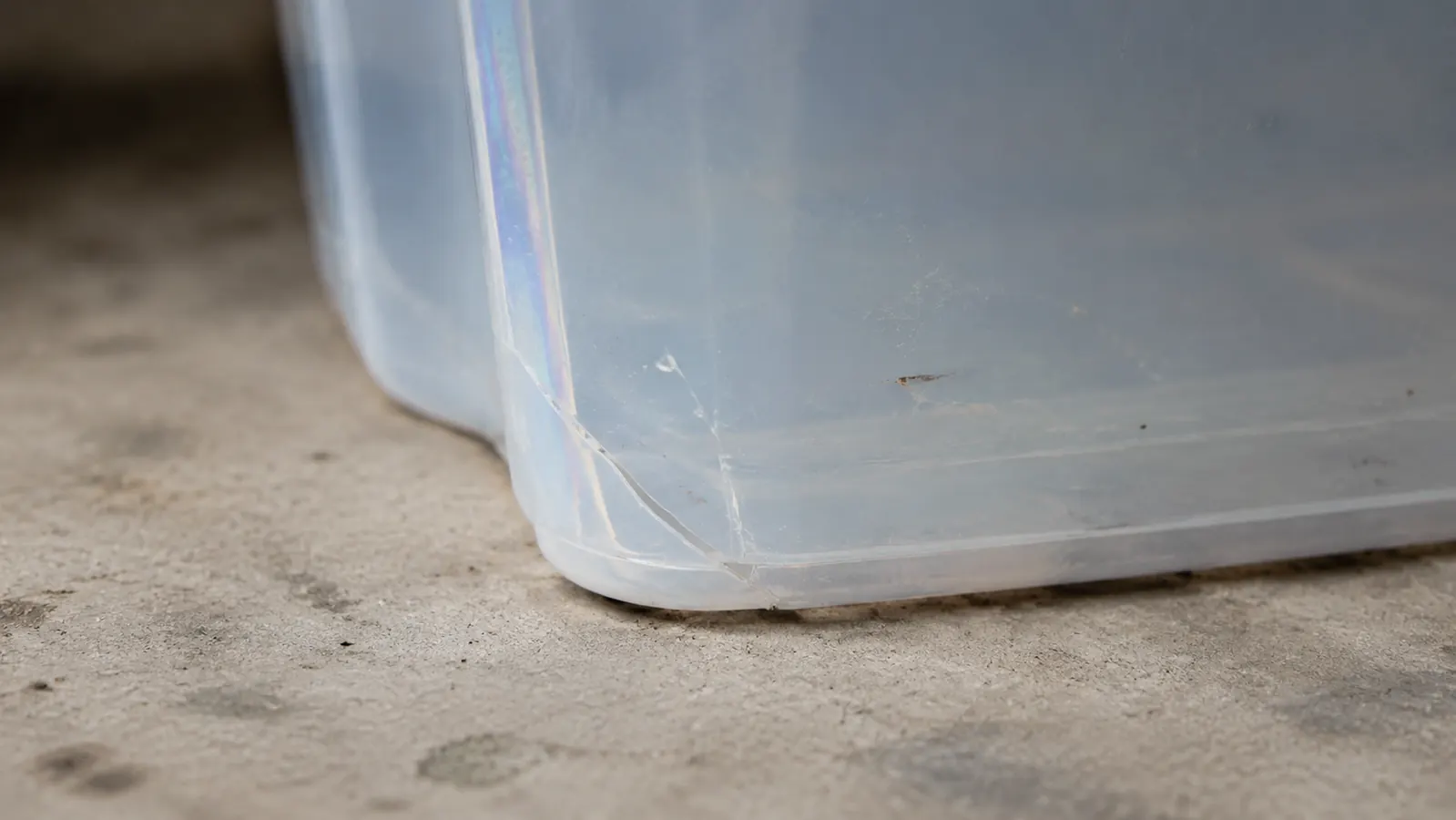
Two of the twelve installations had cracking by the twelve-month mark. Both were in the garage environment, and both cracks appeared at the same location: the lower corners of the bin body, near the base. These were hairline cracks, not failures that let contents spill, but cracks nonetheless. My read is that the bins are not designed to handle consistent temperature extremes, and the corners are the stress concentration point.
Interior bins in climate-controlled homes showed zero cracking across all ten installations. That is a meaningful data point. If you are using these in a conditioned closet, bedroom, or pantry, the cracking risk appears very low. If you are using them in an uninsulated garage or attic, I would look at bins with a thicker wall gauge, or at least accept that you may be replacing them in two or three years.
The 34,000 Amazon reviews reflect this split: the low-star reviews cluster around cracking and lid problems, and almost all of them read like garage or high-heat storage scenarios. The high-star reviews tend to be interior closet users who genuinely love the product. Both groups are telling the truth about the same bins.
Labeling and Daily Usability
One underrated advantage of the IRIS USA design is how well the exterior surface takes labels. The flat panel on the front of each bin is just wide enough to fit a standard label maker tape strip with room to spare, and the plastic is smooth enough that labels stick cleanly without bubbling. I use a Brother P-Touch label maker for most client installs and the combination works well. After twelve months, none of the labels I applied had started peeling in interior settings.
I also tested a simple dry-erase marker on the bins for a client who wanted flexibility to relabel as contents changed. That worked short-term but rubbed off too easily. Stick with adhesive labels, or use label holders clipped to the bin handles if you change contents seasonally and do not want permanent labels.
What the 54-Qt Size Actually Holds
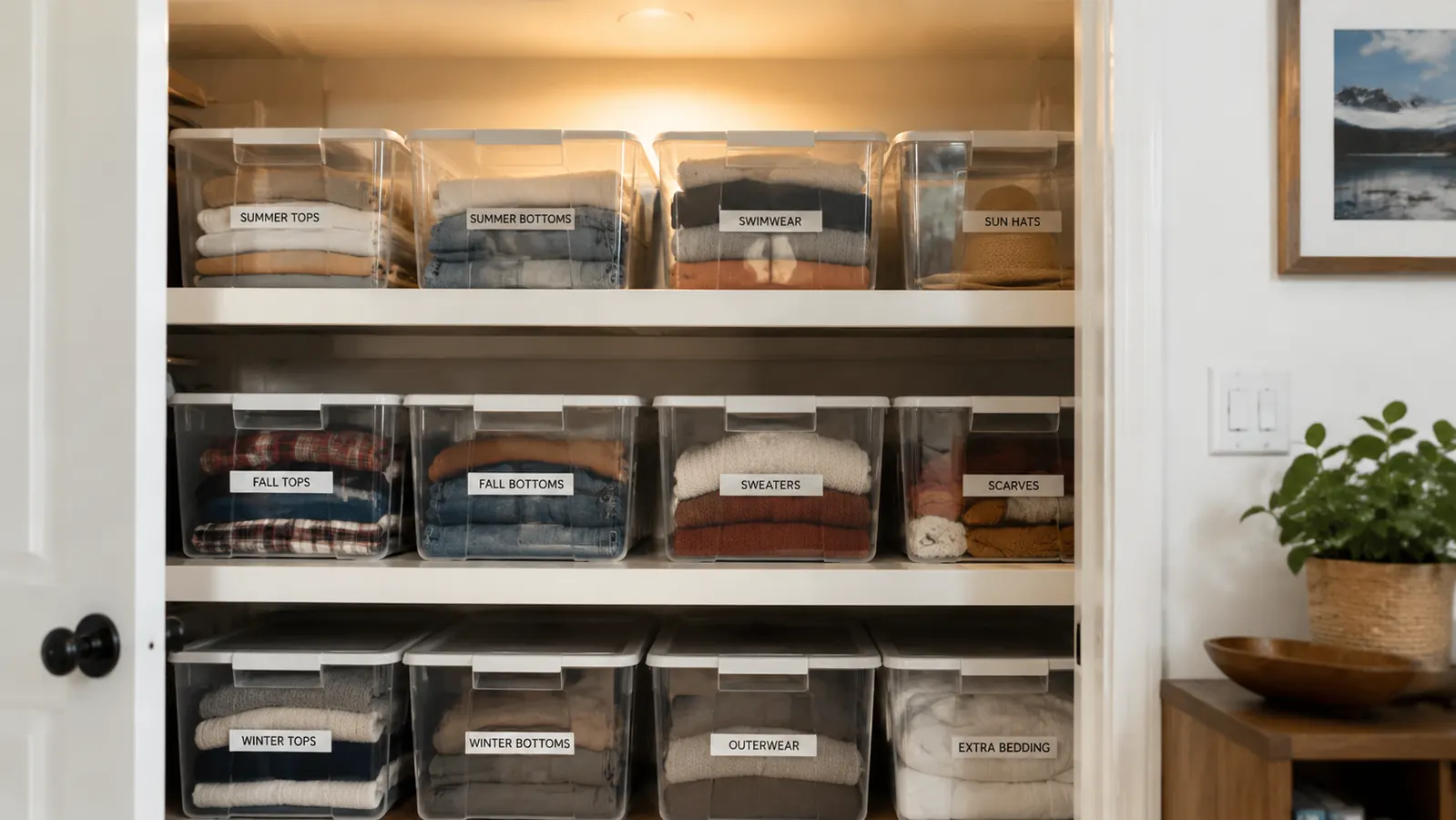
54 quarts is a genuinely useful size. It is large enough to fit a full set of king-size bed linens, a child's winter coat, or a substantial amount of holiday decor without forcing you to cram. It is not so large that an adult cannot lift it comfortably when full. I use this as my benchmark when recommending bins to clients: can a person of average strength carry it alone when it is at reasonable capacity? With IRIS USA 54-Qt, the answer is yes, as long as you are not filling it with books or tools.
For context, I had one client fill three of her bins with hardback books. The bins did not fail, but the base flexed visibly when she moved them, and I would not recommend it. These are not heavy-duty tote boxes. They are medium-duty storage bins, and they perform well at that tier.
If you are still weighing your options before buying, it is worth reading my comparison of IRIS USA vs Sterilite storage bins where I put both brands through the same conditions side by side.
The 6-Pack Value Proposition
The 6-pack format is where IRIS USA makes its strongest case. Buying six bins at once means you can do a meaningful organizational system in one order, not piece it together over three separate deliveries. For a hall closet, a small bedroom closet, or the shelving unit in a laundry room, six 54-Qt bins will typically handle one full organization project. That matters practically because having uniform bins is the thing that makes a storage area look clean. A mix of sizes and brands from different shopping trips almost never looks as intentional.
The per-bin cost at today's price is reasonable for what you get. I have recommended more expensive bins that performed about the same in climate-controlled interior settings. I have also recommended cheaper bins that performed considerably worse. IRIS USA lands in a useful middle zone.
For more context on how stackable bins change a cluttered closet beyond just the hardware, I put together a piece on 10 reasons stackable bins transform closets that covers the systemic benefits most people overlook when they first set one up.
What I Liked
- Stacking alignment is stable and reliable even in three-high configurations
- Plastic clarity stays excellent in climate-controlled interior settings for 12-plus months
- 54-Qt size handles king linens, a winter coat, or a season of holiday decor without cramming
- 6-pack format lets you complete a full small-closet system in a single order
- Flat front panel takes adhesive labels cleanly, labels hold without peeling indoors
- BPA-free polypropylene at a reasonable price-per-bin for the quality level
Where It Falls Short
- Lid fit is inconsistent on some units, with one or two corners that do not fully seat
- Plastic hazes and shows UV damage in garage or sunlit storage within 6 to 12 months
- Corner cracking appeared in two of twelve garage-environment installs by month twelve
- Base flexes visibly under heavy loads like books; not designed for dense materials
- Replacement lids are not sold separately through standard retail channels
Who This Is For
IRIS USA 54-Qt bins are a strong choice for anyone organizing a climate-controlled space: hall closets, bedroom closets, linen closets, under-stairs storage, pantries, and laundry rooms. If you are storing things you access occasionally, like seasonal clothing, holiday decor, extra bedding, or archived paperwork, these bins will hold up for years and keep your items visible and tidy. The 6-pack format makes them especially practical for first-time closet organization projects where you need enough bins to build a real system in one order.
Renters who move every few years will find these bins easy to reconfigure on new shelving. Parents storing kids' off-season clothing or sports gear in a bedroom closet will get real use out of the visibility and the stable stacking. Anyone who has previously used a mismatched collection of bins and boxes will notice the difference that uniform size and clear plastic makes to how calm a space actually feels.
Who Should Skip Them
If you are organizing an uninsulated garage, a basement that floods or sees moisture, an attic with temperature extremes, or any outdoor storage space, I would not put IRIS USA bins at the top of my list. The lid fit issues and corner cracking I observed both showed up specifically in the garage environment, and I have seen sturdier options that are worth the extra spend for those conditions. Look at bins with a thicker wall specification or a heavy-duty rating if your storage space is not climate-controlled.
I would also steer away from these if you are storing anything particularly heavy: tools, hardware, dense books, or anything that puts serious weight on the bin walls. The 54-Qt size is large enough that it is tempting to overfill, and the walls are not built for that kind of load. Use smaller bins for heavy items and save these for the lighter, bulkier categories they handle best.
Organizing a closet or setting up linen storage this week? These are worth a look.
The IRIS USA 6-pack is one of the more practical ways to set up a real stackable system in a single order. Check today's price and confirm what's in stock before your next organization day.
Amazon Check Today's Price on Amazon →