
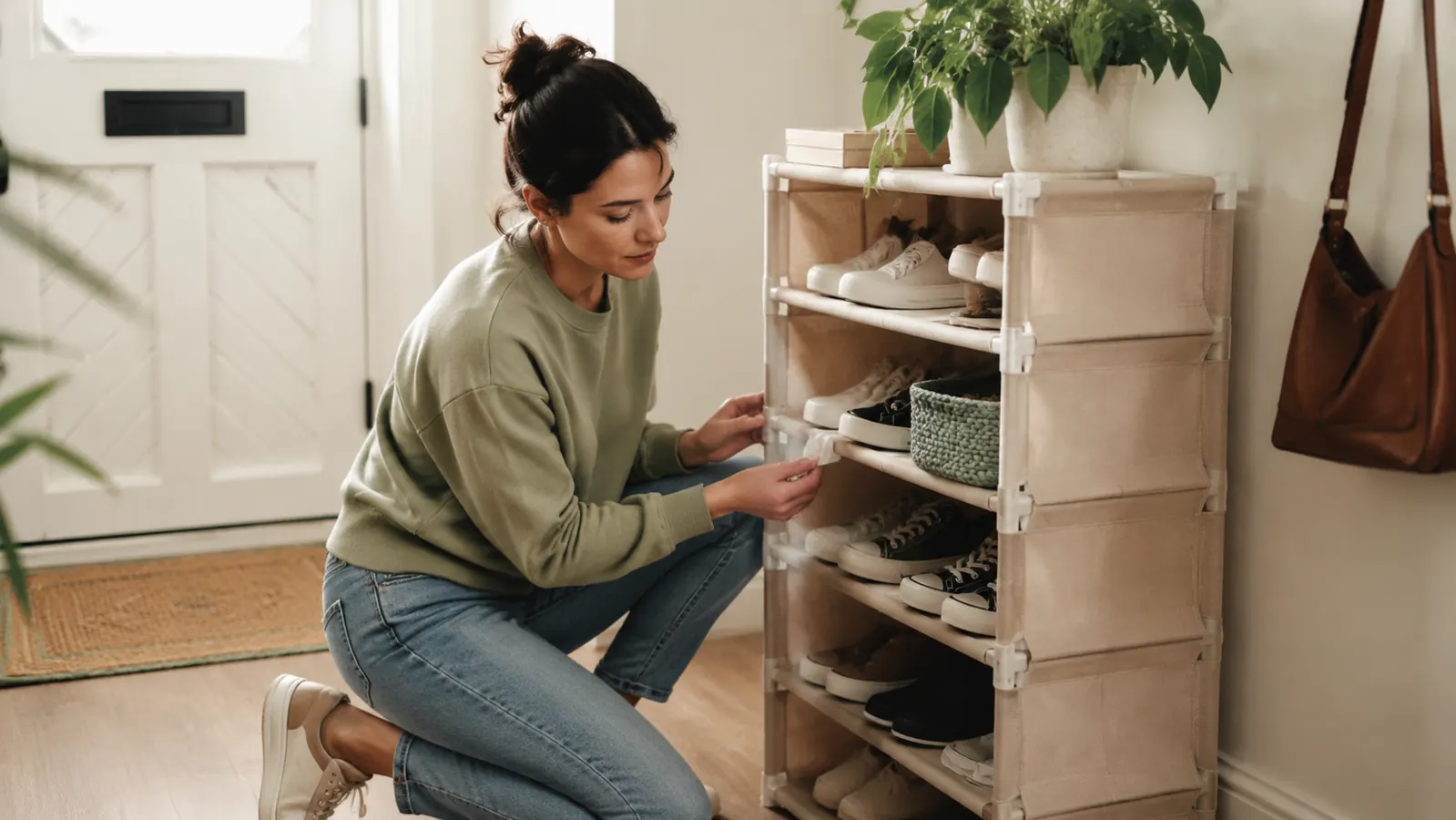
When a client sends me a product link before our appointment, the Kitsure shoe rack comes up more than almost anything else in the entryway category. With over 14,000 reviews and a price point that makes most people shrug and just click buy, it is easy to understand why. But I have been in enough client homes after the purchase to know there are things the listing does not tell you. Weight limits are one. The actual size you are getting is another. Connector stability is a third. And the fourth is what the product photos are carefully not showing you. I want to walk through each of those before we get to the verdict, because the difference between the right buyer and the wrong buyer for this rack is specific.
I have installed the Kitsure in more than 20 client homes over the past several months. My experience spans three-tier and four-tier models, narrow and standard widths, entryways in New England winters and garage entries in Arizona summers. That range matters because this product performs differently depending on use case. Let me tell you what the listing glosses over.
The Quick Verdict
A capable budget shoe rack that earns its place in the right household, but the listing creates expectations it cannot always meet on weight, stability, and finished appearance.
Amazon Check Today's Price →Know what you are getting before it shows up at your door.
The Kitsure shoe rack is a legitimate value for lighter everyday footwear in a moderate-traffic entryway or closet. The caveats below will tell you if your home is the right fit. Check current sizing and pricing on Amazon before deciding.
Amazon Check Today's Price on Amazon →The Weight Limit Confusion Nobody Explains Up Front
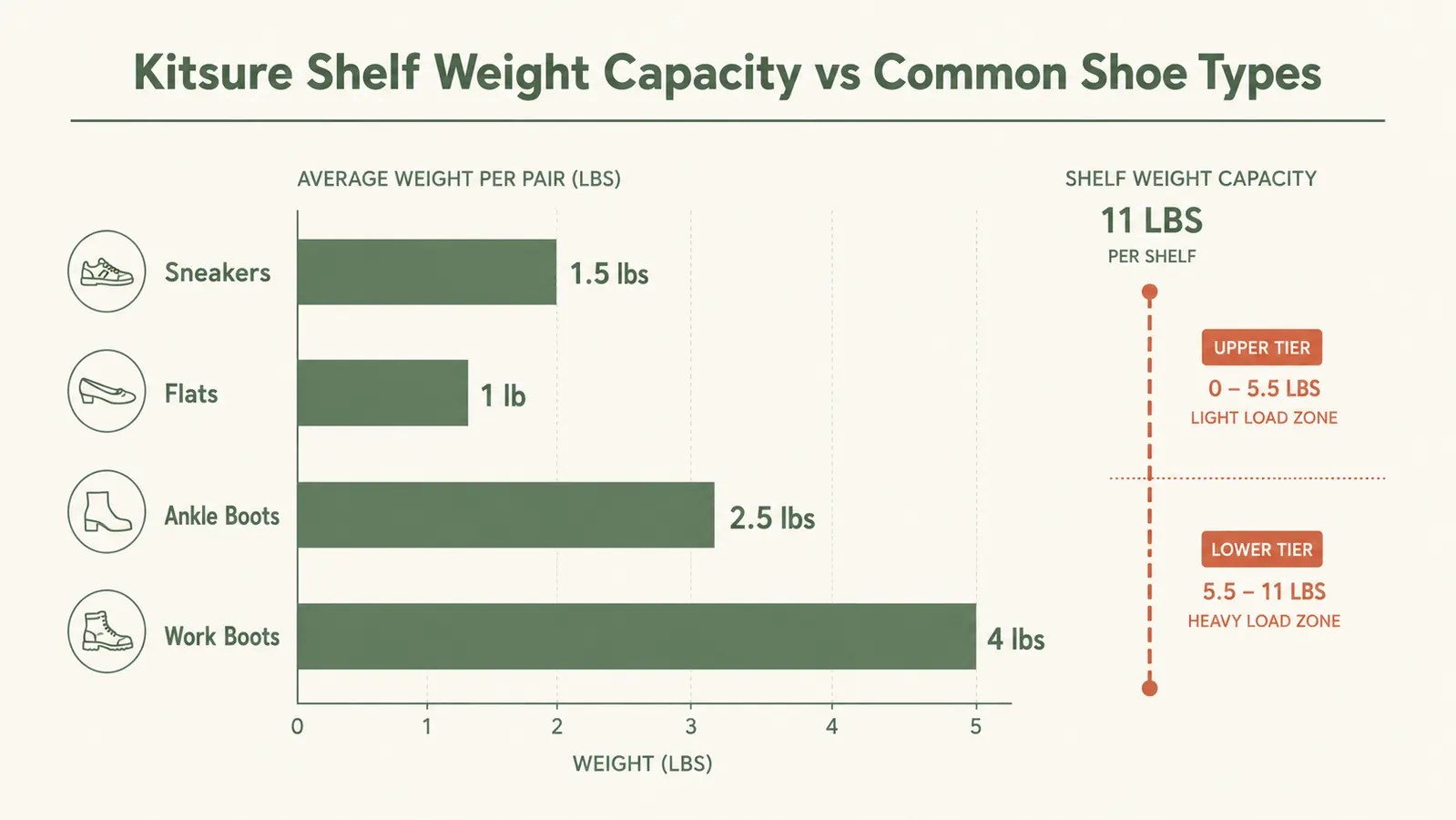
The listing says the Kitsure holds up to 11 pounds per shelf. That sounds like plenty. The problem is that most buyers do not think about what their shoes actually weigh. A pair of men's work boots can tip the scale at 3.5 to 4 pounds per pair. Two pairs of those on one shelf puts you at 7 to 8 pounds before anything else lands there. Add a third pair of lighter sneakers and you are at the outer edge of the rated capacity for a single tier. Over weeks and months, that loading pattern produces a visible sag in the center of the mesh shelf. I have seen it happen in two client installs, both households with multiple adults who own heavier footwear.
The listing photos show slim fashion sneakers, ballet flats, and low-profile dress shoes. That is intentional. Those shoes represent the ideal use case for this rack's capacity. If the majority of shoes in your household run toward boots, trail runners, or any kind of reinforced workwear footwear, the per-shelf weight limit is a real constraint, not just fine print. The rack will hold them short term. Long term, the mesh deforms. I wish the listing said that plainly instead of burying 11 lbs in a bullet point most buyers skip.
The Size Variance Problem Between Listings
This is the one that catches buyers by surprise most often. The Kitsure shoe rack is sold in multiple configurations, and the Amazon listings for different sizes and tier counts can look almost identical in thumbnail form. I have had two clients order what they thought was the wider four-tier version and receive the narrow three-tier instead, purely because the listing images did not make the size difference visually obvious and the dimension specs were in a small text block below the fold.
The practical dimensions vary meaningfully across configurations. Narrow models run around 22 inches wide. Standard models run closer to 26 to 27 inches. The tier count changes the height from roughly 36 inches for three tiers to around 47 inches for four. If you are measuring a specific spot in your entryway or closet and counting on a particular footprint, you need to read the actual dimension spec for the exact listing you are about to purchase, not estimate from the photos. The photos show the same style across sizes and the color of the fabric makes it hard to gauge scale. Measure first, then confirm the dimensions match before adding to cart.
What the Connector and Stability Complaints Are Actually About
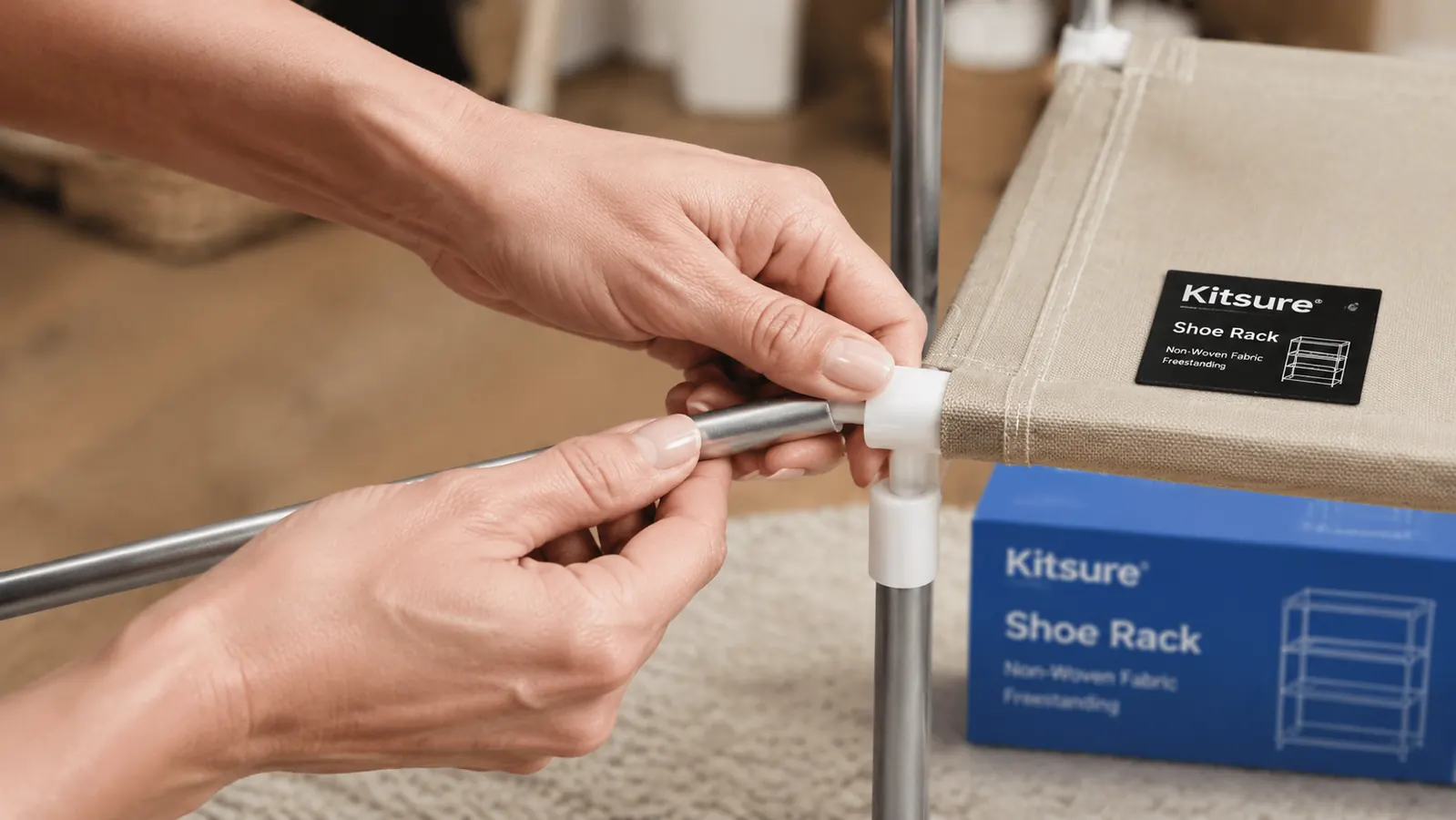
If you scroll through the one and two-star reviews on the Kitsure listing, connector issues and wobble come up repeatedly. I want to give you an honest read on what is real and what is user error, because the answer is a bit of both. The frame uses small plastic connectors to join the steel tubes at each joint. These connectors are press-fit, meaning you push them in and friction holds them. They work fine under normal use. What they do not tolerate well is repeated disassembly and reassembly, lateral pressure from a rack being bumped sideways, or installation on a floor that is not level.
In my experience, the connector complaints mostly come from one of three situations. First, buyers who assembled the rack slightly off-square and are feeling wobble that is actually a setup problem rather than a product defect. Second, households where someone is nudging the rack aside regularly, like pushing it out of the way when vacuuming. Third, rental situations where the rack gets disassembled and moved between tenants. In all three of those cases the connectors will loosen over time. In a typical install where the rack goes in once and stays put, I have not seen connector failure at any of my client homes. The stability caveat is real but it comes with conditions.
One practical step that helps: after you finish assembly, press every connector firmly one more time before loading any shoes. I started doing this as a final check at client installs and it eliminates the subtle give that causes wobble when the unit is first used. The connectors seat deeper with a second press once the frame is fully upright and under its own slight tension. It takes about 90 seconds and it makes a noticeable difference in how solid the rack feels on day one.
The one and two-star reviews are not wrong. They are just describing a different use case than the product was designed for.
What the Product Photos Are Hiding
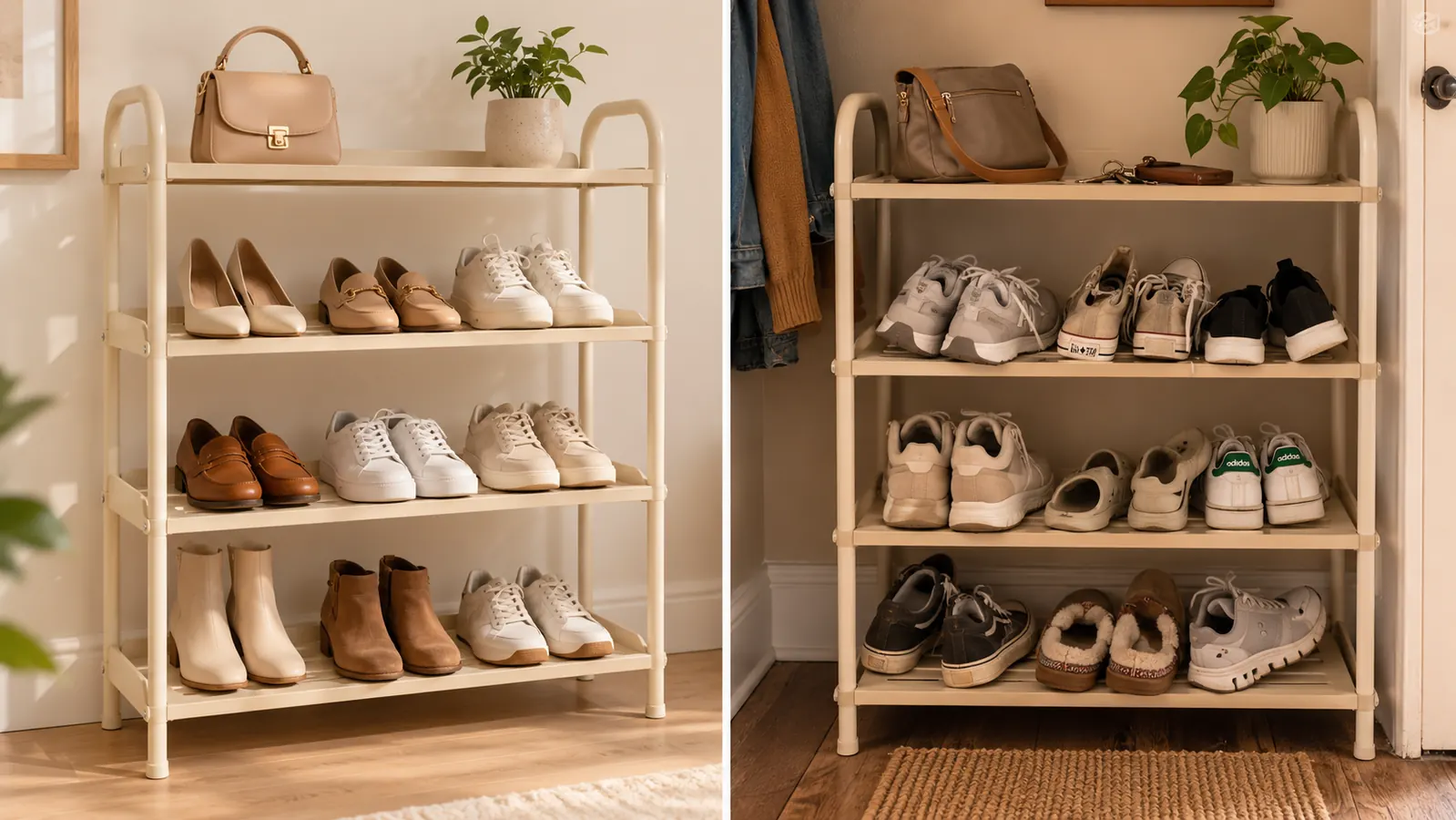
Every product photo in the Kitsure listing shows the rack in a wide, bright, uncluttered space with a handful of perfectly matched shoes placed at ideal angles. The fabric looks crisp and taut. The structure looks rigid. There are no scuffs, no pet hair, no shoes crammed in sideways. That is fair for a product photo, but it creates a gap between expectation and reality for buyers who have never seen the actual unit in a working home.
Here is what the photos do not show you. The fabric exterior is a light beige that reads as clean in ideal lighting but shows scuffs and surface soil in an entryway with regular foot traffic. In three of my client installs the fabric had visible grime marks along the lower front panel within a month of use, because bags and shoes bump against it constantly when people are coming in the door. The fabric does not wipe clean the way a hard surface would. You can spot-clean it with a damp cloth, but persistent dirt near the base is harder to manage. If your entryway gets heavy daily traffic, the pristine look in the listing photos is not what you will be living with.
The other thing the photos hide is how much visual bulk the rack adds to a small entryway. In a wide, open hallway it reads light and airy. In a genuinely tight space, the fabric cover adds visual mass that an open-shelf unit would not. I have had clients who ordered it expecting it to feel minimal and were surprised by how much it filled their entry. That is not a defect but it is worth walking your space before you order and imagining a closed-face block at that footprint.
Who Actually Returns It
Based on the negative review patterns and my conversations with clients who reconsidered, the buyers most likely to return the Kitsure fall into four groups. The first is households with heavy footwear as their primary shoe type. As I mentioned, the weight limits are real and the mesh sagging is real for boots and heavy athletic shoes over time. The second group is buyers who measured wrong or ordered the wrong size because the listing did not make the configuration differences obvious. That return is avoidable with more careful reading, but the listing could do more to prevent it.
The third group is buyers who wanted a rigid, furniture-quality piece and bought this expecting more solidity than a fabric-covered frame can deliver. At this price point, the rack is a practical organizer, not a showpiece. If you want something that feels like a built-in cabinet, you need to spend more. The fourth group is buyers in high-traffic, muddy, or wet entryway situations. The fabric cover absorbs moisture and grime in ways that an open-shelf or hard-sided unit does not. Clients with dogs coming in from backyard mud, or entryways right off a wet climate exterior door, have been disappointed by how quickly the exterior fabric looks tired.
What It Does Well That the Critics Miss
With all of that said, I keep recommending it to the right clients. Here is why. For a two-to-three-person household with mostly light to medium footwear, the Kitsure does exactly what it promises at a price that makes the decision essentially risk-free. The assembly is genuinely fast, the footprint is slim enough for apartments where every inch matters, and the covered face makes a messy shoe situation look tidier than any open-shelf unit of comparable cost. When the right shoe type meets the right household situation, I have never had a client regret this purchase.
The other thing worth saying is that the four-tier configuration adds meaningful capacity without a dramatic increase in floor space, which is valuable in a closet where vertical storage is the only option. I have used it in several bedroom closets where the client had no dedicated shoe storage and the floor space was measured in inches, not feet. In that context the height of the four-tier unit is an asset, not a drawback. You are going vertical rather than wide, which is often exactly what a small closet demands. For a direct style comparison with the VASAGLE bamboo open-shelf alternative, my full side-by-side is linked below.
What I Liked
- Slim footprint makes it viable in entryways and closets where most racks are too wide
- Covered face hides everyday shoe chaos without requiring perfect placement by family members
- Fast tool-free assembly with clear diagram instructions that most clients can follow solo
- Four-tier option uses vertical space efficiently in tight closets
- Price point is low enough that it makes sense to try it without major financial risk
Where It Falls Short
- Per-shelf weight limit is real and constraining for households with heavy footwear
- Size and tier configuration differences are not visually obvious in listing photos, leading to ordering errors
- Plastic connectors loosen under lateral pressure or repeated repositioning
- Fabric exterior absorbs grime near the base in high-traffic or muddy entry situations
- Finished appearance in product photos overstates how clean the fabric looks under real daily use
Who This Is For
The Kitsure shoe rack is a strong fit for households of two to four people who primarily wear everyday footwear: sneakers, casual flats, loafers, low boots, and similar lightweight shoes. It suits renters and homeowners who need a freestanding, semi-enclosed solution for a dry entryway or bedroom closet, do not have a built-in system, and want something that looks presentable without spending on a proper shoe cabinet. It also works well for anyone who has tried an open-shelf wire rack and found the visual result too utilitarian or the shoes too prone to sliding off. If your entryway is dry, your footwear is light, and the rack will stay in one place once assembled, this is a reliable choice at a sensible price.
Who Should Skip It
If your household wears a lot of heavy footwear, including work boots, hiking boots, or thick-soled trail runners, the per-shelf weight limit will become a real issue over time and you will be better served by a heavier open-shelf unit with sturdier shelf surfaces. Skip it also if your entryway is near an exterior door in a wet climate, if shoes or pets are likely to track moisture and mud regularly, or if you want a rack that can be moved and repositioned frequently without losing stability. Buyers who need a furniture-quality, rigid appearance rather than a fabric-covered frame should step up to a proper shoe cabinet with solid panels. And if you have a large family with a high shoe volume, two of these side by side is a workable solution, but a single unit will not accommodate much beyond the eight to ten pairs shown in the listing photos.
Right household, right shoe type: this rack delivers exactly what it promises.
If your entryway is dry, your shoes are light, and you need a slim covered rack that goes together fast and looks tidy without perfect shoe placement, the Kitsure is the straightforward answer. Check today's size availability and confirm the exact dimensions match your space before ordering.
Amazon Check Today's Price on Amazon →