
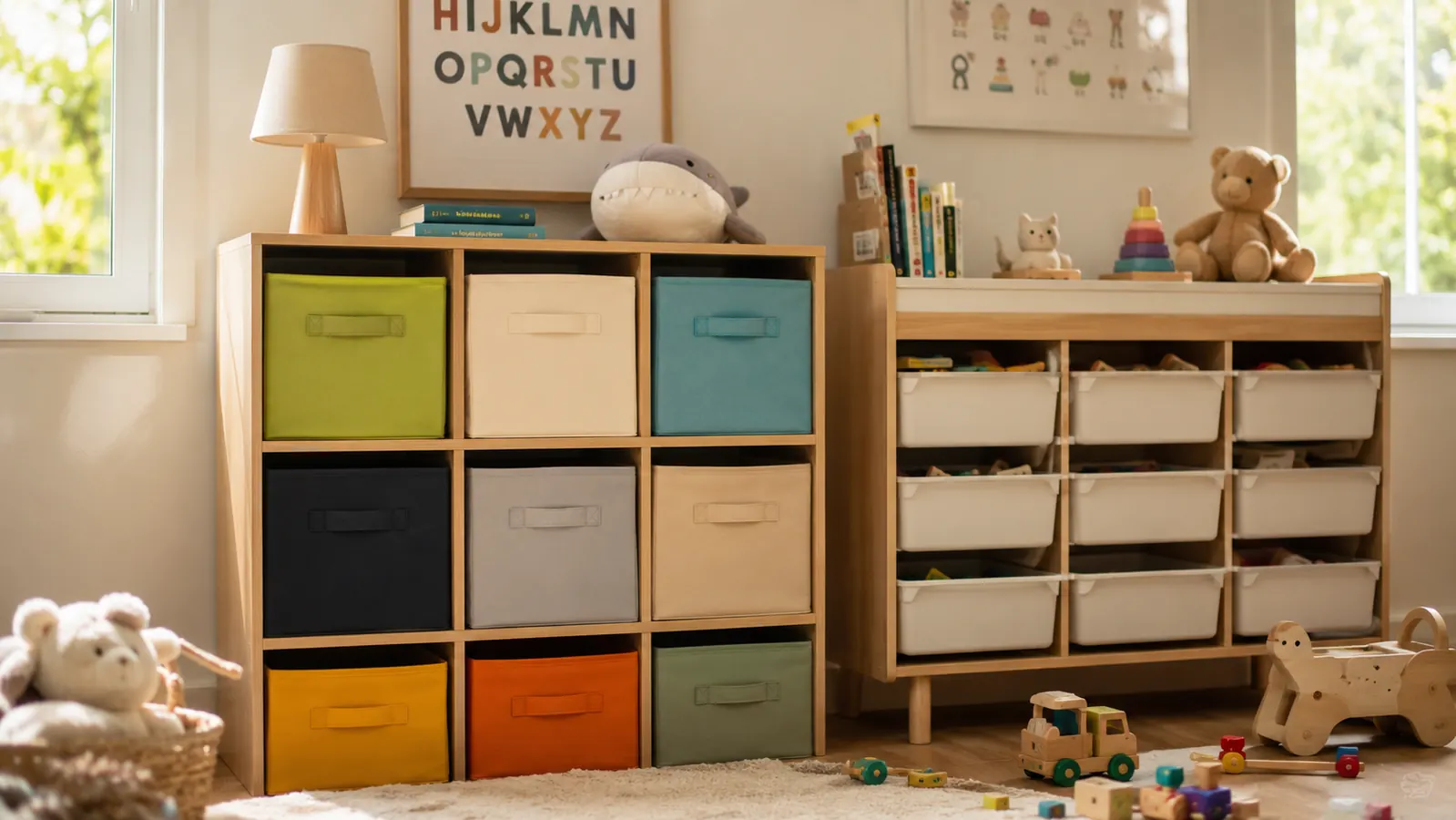
If you have spent any time in the toy storage aisle on Amazon, you have seen both names. The Humble Crew toy storage organizer sits at 4.7 stars across nearly 39,000 reviews. The Delta Children toy organizer is not far behind. Both use a rack-style frame with removable fabric bins. Both are priced within reach of most family budgets. On paper, they look like the same product wearing different labels. In real client playrooms, they are not.
I have installed both in client homes over the past three years. The families I work with have kids ranging from just under two years old to around eight, and the playrooms I set up get actual daily use: building blocks hitting the floor, bins yanked in and out fifty times a day, older siblings stacking toys on top of the frame when they run out of space. What I have found is that the two organizers diverge quickly once real life starts. Here is the honest breakdown.
How I Compared These Two
I want to be clear about how this comparison works. I am not running a controlled lab test. I am a professional home organizer who has set up toy storage in more than 40 client homes, and I have used both of these units in real families' spaces. My data comes from client check-ins at three months, six months, and in some cases a year or more after installation. I track which units are still standing, which bins are still being used correctly, which frames have developed wobble, and whether kids are putting things away on their own or leaving everything on the floor.
The families where I have used both organizers have kids between 2 and 8, live in houses and apartments ranging from 900 to 2,400 square feet, and have toy collections that range from light (mostly soft toys and books) to heavy (Lego, magnetic tiles, wooden blocks, play kitchens with accessories). That range gives me a realistic picture of where each product performs well and where it falls short.
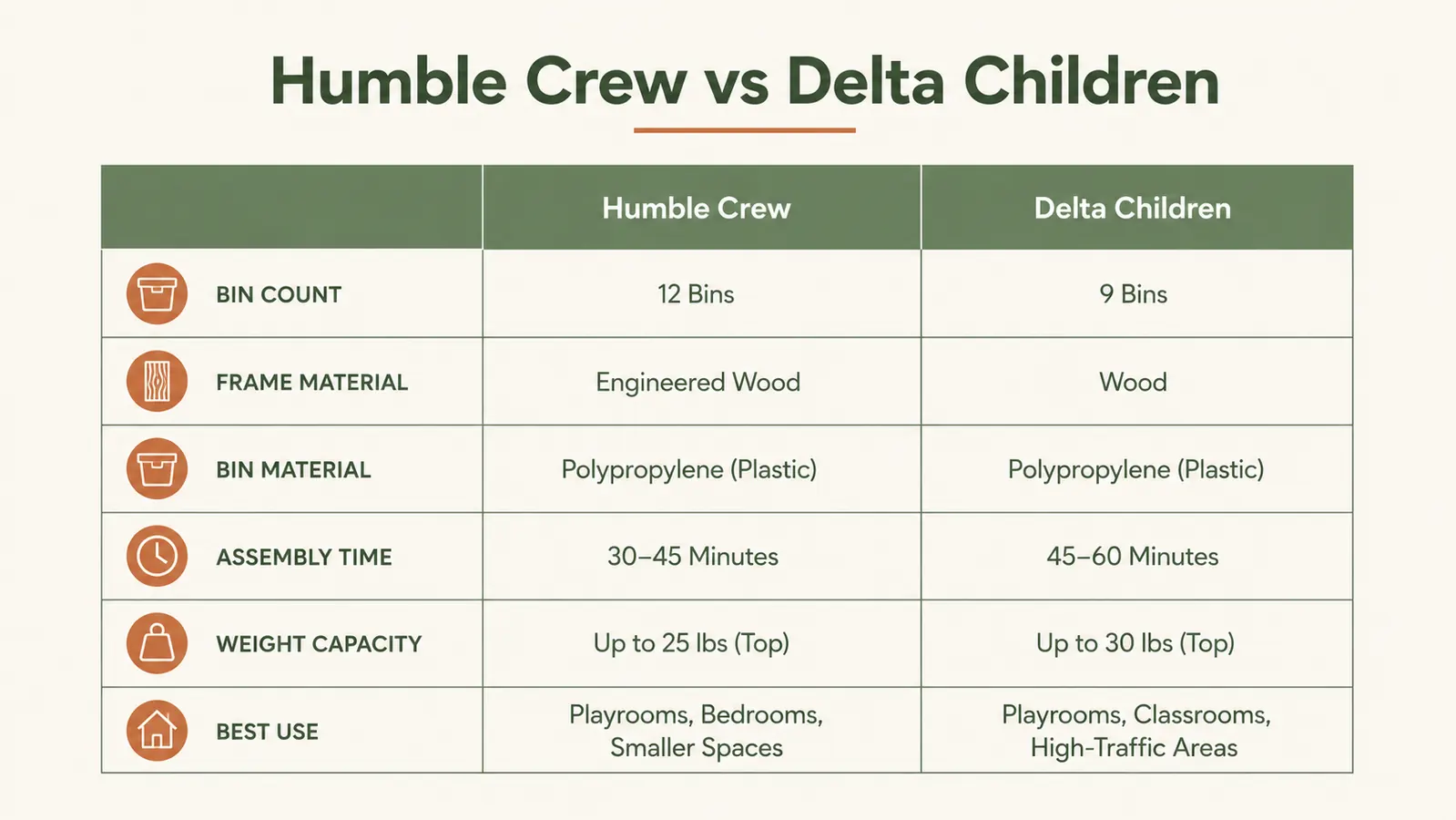
| Humble Crew | Delta Children Toy Organizer | |
|---|---|---|
| Price range | Check today's price on Amazon (16-bin model) | Mid-range to higher-end (varies by size) |
| Bin count | 16 removable bins | 12 removable bins |
| Frame material | Engineered wood composite | Solid wood construction |
| Bin material | Non-woven fabric, lightweight | Fabric with reinforced base |
| Assembly time | 30-45 minutes, tool-free connectors | 45-60 minutes, hardware required |
| Weight capacity per shelf | Not rated; bins designed for lightweight toys | Higher per-shelf load tolerance |
| Best use case | High-bin-count sorting for ages 3-8 | Fewer, larger bins for ages 2 and up |
| Rating | 4.7 stars, 38,879 reviews | 4.6 stars, lower review volume |
Where the Humble Crew Wins
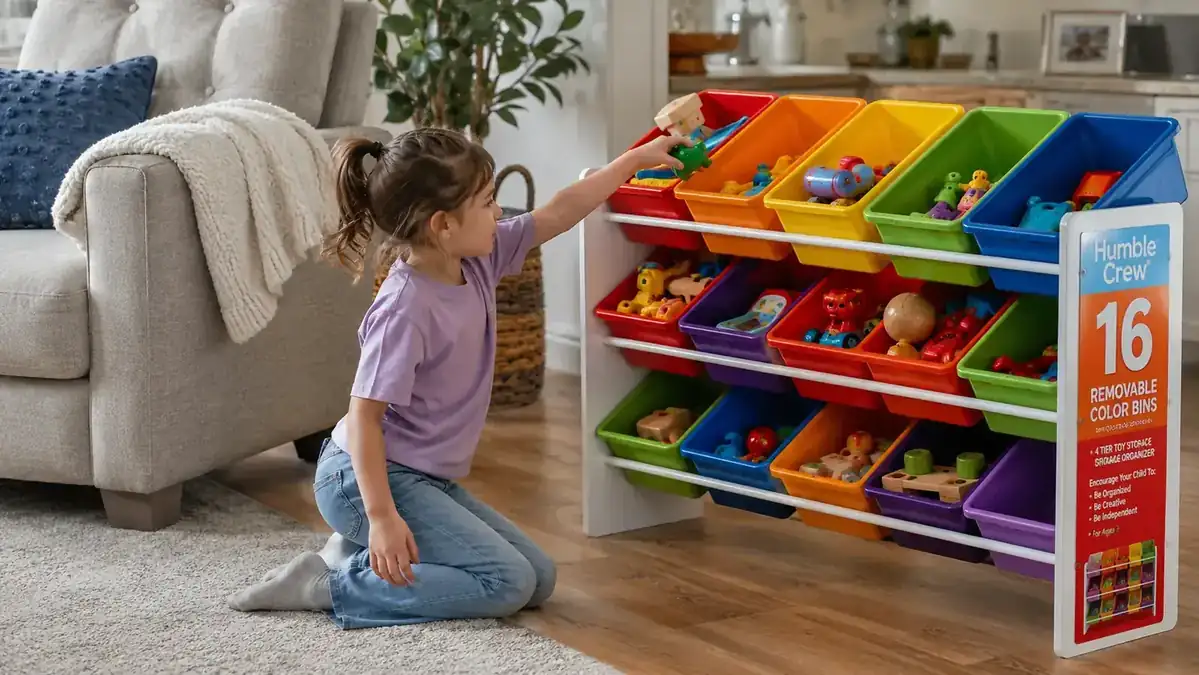
The 16-bin count is the real advantage here, and it is not a small one. When I set up toy storage for a client, the single thing that makes a system stick for kids is category clarity. Sixteen bins means you can actually separate Lego bricks from duplo blocks, crayons from markers, small cars from large trucks, and princess figures from dinosaurs. Each category gets its own home. When a four-year-old can put a toy back in the right bin without stopping to think about where it goes, they actually do it. Twelve bins forces you to combine categories, and combined categories are the fastest way to watch a system collapse within a month.
The bin dimensions on the Humble Crew are also sized well for small hands. The openings are wide and the depth is shallow enough that a two-year-old can reach in and retrieve a toy without tipping the whole bin over. That sounds like a small thing until you have watched a toddler dump a bin of 40 small cars on the floor because they could not grab the one on the bottom. I have watched kids in client homes use these bins independently by age three, which is the actual goal of toy storage. Independent cleanup without parental prompting starts with a system that is physically easy enough to use.
The Humble Crew frame assembly is also genuinely quick. I can have a unit together and in place in under 40 minutes working alone. That matters when you are doing a full room setup in a single client appointment. The tool-free connector system is straightforward enough that parents can reassemble a unit after moving it to a different room without needing help. On the value side, at around $56 for the 16-bin model, you are paying roughly three and a half dollars per storage compartment. Replacement bins are available separately in multiple color combinations, which lets parents color-code by toy category or replace a bin that has been drawn on without buying a whole new unit.
Where Delta Children Wins
The Delta Children organizer has a better frame. That is the plain truth. The solid wood construction feels more substantial when assembled, does not flex when a five-year-old grabs the side of the unit to steady themselves while reaching for a high bin, and holds up better in humid rooms. That last point matters more than people expect. In bathrooms used for bath toy storage, or in older homes where playroom humidity swings between summer and winter, engineered wood composite expands and contracts. The Delta Children solid wood frame handles that without the corner joints loosening. If you have a child who treats furniture as climbing equipment, the Delta Children frame is the physically safer choice.
The Delta Children bins also have a reinforced base that holds its shape better with heavier items. Chunky board books, magnetic tile sets, and wooden blocks are hard on lightweight fabric bins. Heavy loads in thin-fabric bins sag the bottom over time, which makes the bin sit crooked in its slot and harder to slide in and out. If your child's toy collection skews heavy rather than plush and lightweight, those reinforced Delta Children bins handle the load more reliably through a second and third year of use. The Delta Children brand also has a broader reputation for furniture-grade quality, which some parents factor in when choosing an item that sits in a visible living space.
More bins means more categories, and more categories means kids can actually put things back in the right place without guessing. That is the part of toy storage most organizers underestimate.
Your playroom floor is one organizer away from staying clear after bedtime.
The Humble Crew 16-bin organizer is the system I install most often in client homes with kids ages 3 through 8. Sixteen sorted bins, lightweight fabric that small hands can grab, and assembly you can finish in an afternoon.
Amazon Check Today's Price on Amazon →The Honest Cons of Each
The Humble Crew frame is engineered wood, not solid wood, and it shows over time. I have seen units that were assembled correctly start to wobble at the corner joints after 18 to 24 months of daily use, particularly in homes where the unit gets bumped regularly. The connectors are plastic and they do not have the same grip as hardware-fastened joints. If you want a frame that will look the same in three years as it does on day one, the Humble Crew is not that product. The bins themselves can also develop loose stitching at the handles after heavy use, and the non-woven fabric stains more visibly than a wipeable surface would. It is a high-performing organizer for the first year or two, but it is not a permanent furniture investment.
The Delta Children unit has its own real limitations. The assembly is more involved, requiring actual hardware and a bit more patience to get right. More importantly, 12 bins is a genuine constraint in homes with varied toy collections. I have watched clients fill those 12 compartments to overflowing within six months and then stack overflow toys on top of the unit or in bags beside it, which undermines the whole system. Categories get merged, kids stop sorting, and within a few months the floor looks the same as it did before you bought the organizer. If your child has more than 10 distinct toy types, 12 bins is not enough to sustain the system long-term.
Real Playroom Scenarios: Which One Fits
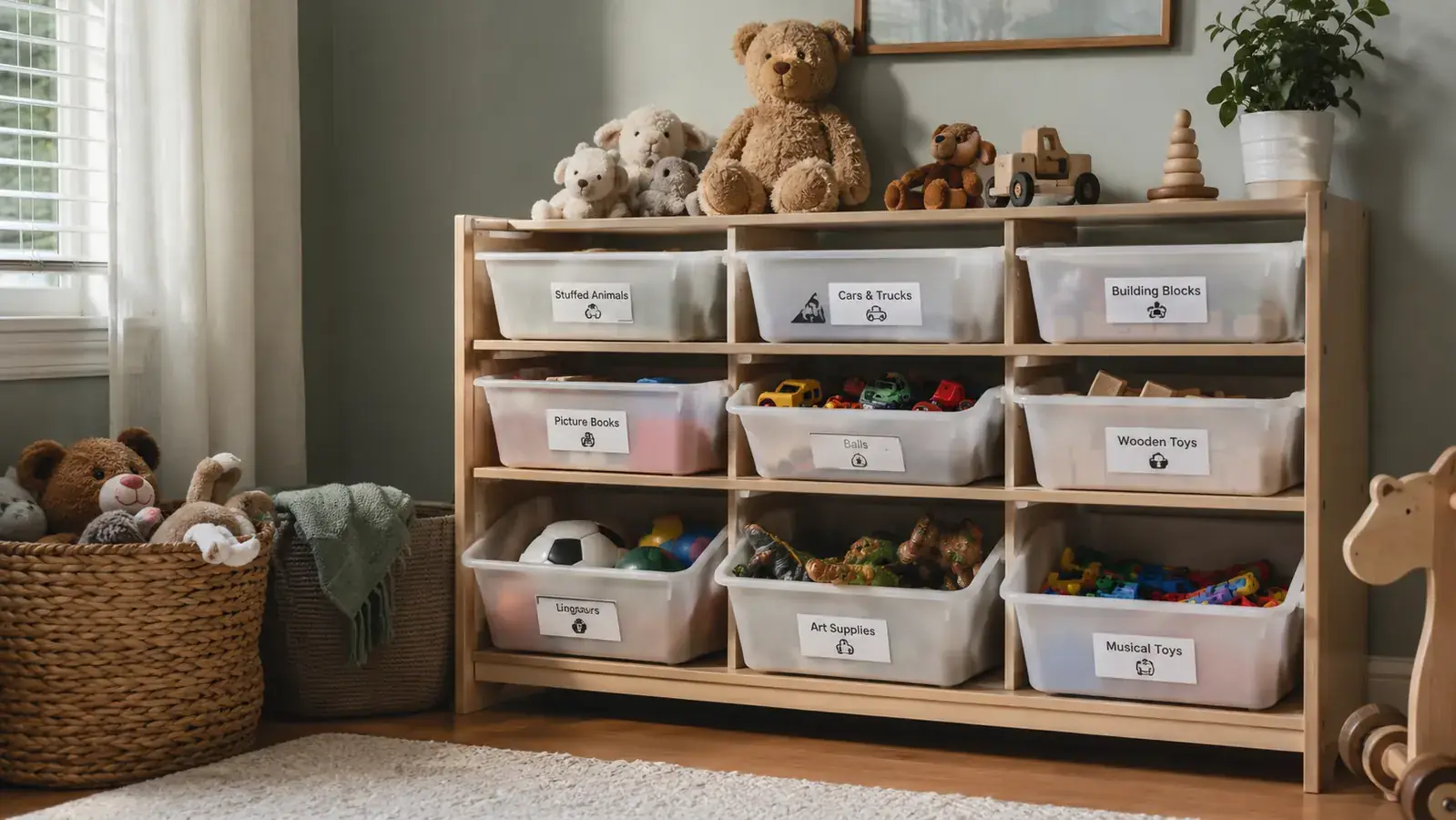
One client, a mom in a three-bedroom townhouse with two kids aged 4 and 6, had been struggling with a single large toy chest that everything got dumped into. The older child had a Lego collection, a set of art supplies, and a box of figures. The younger one had soft toys, cars, and play food. That is at minimum six categories just between two kids with moderate toy collections. I set up a Humble Crew 16-bin unit, split the bins by kid and by category within each kid's section, and labeled everything with picture labels the four-year-old could read. At her six-month check-in, the bins were still sorted and the kids were putting things away on their own. The Humble Crew bin count made that possible.
A different client, a dad with a single toddler aged 26 months, had a smaller toy set: mostly wooden toys, a few board books, and some stacking blocks. His concern was safety because his daughter was at the stage of grabbing the frame to stand up. I recommended the Delta Children unit for that situation. The sturdier frame gave a safer handhold, the 12 bins were more than enough for a young toddler's collection, and the reinforced bins handled the heavier wooden toys without sagging. At his follow-up, the frame was still solid and the toddler had moved on to pulling bins in and out as its own game.
Who Should Buy Which: My Summary
If I am walking into a client playroom and the kids are between 3 and 8 with a varied toy collection, I recommend the Humble Crew every time. The 16-bin system is what makes the independent cleanup habit stick, and that is the actual goal of toy storage. If the kids are toddlers with a smaller and heavier collection, or if long-term frame durability over five or more years is the priority, the Delta Children is worth the higher price and the more involved setup. Both are honest, functional products. The question is which problem you are actually solving: maximum sorting capacity for school-age kids, or maximum frame durability and bin strength for toddlers with heavier toys.
For more on how to get kids using a toy bin system on their own, see my guide on how to set up toy storage kids actually use. And if you want a deeper look at how the Humble Crew held up across a full year in more than 20 client homes, read my long-term Humble Crew review.
The 16-bin system is what makes kids actually put things back.
The Humble Crew toy organizer gives you enough categories that the system makes sense to a 4-year-old. Check current availability and color options on Amazon.
Amazon Check Today's Price on Amazon →