
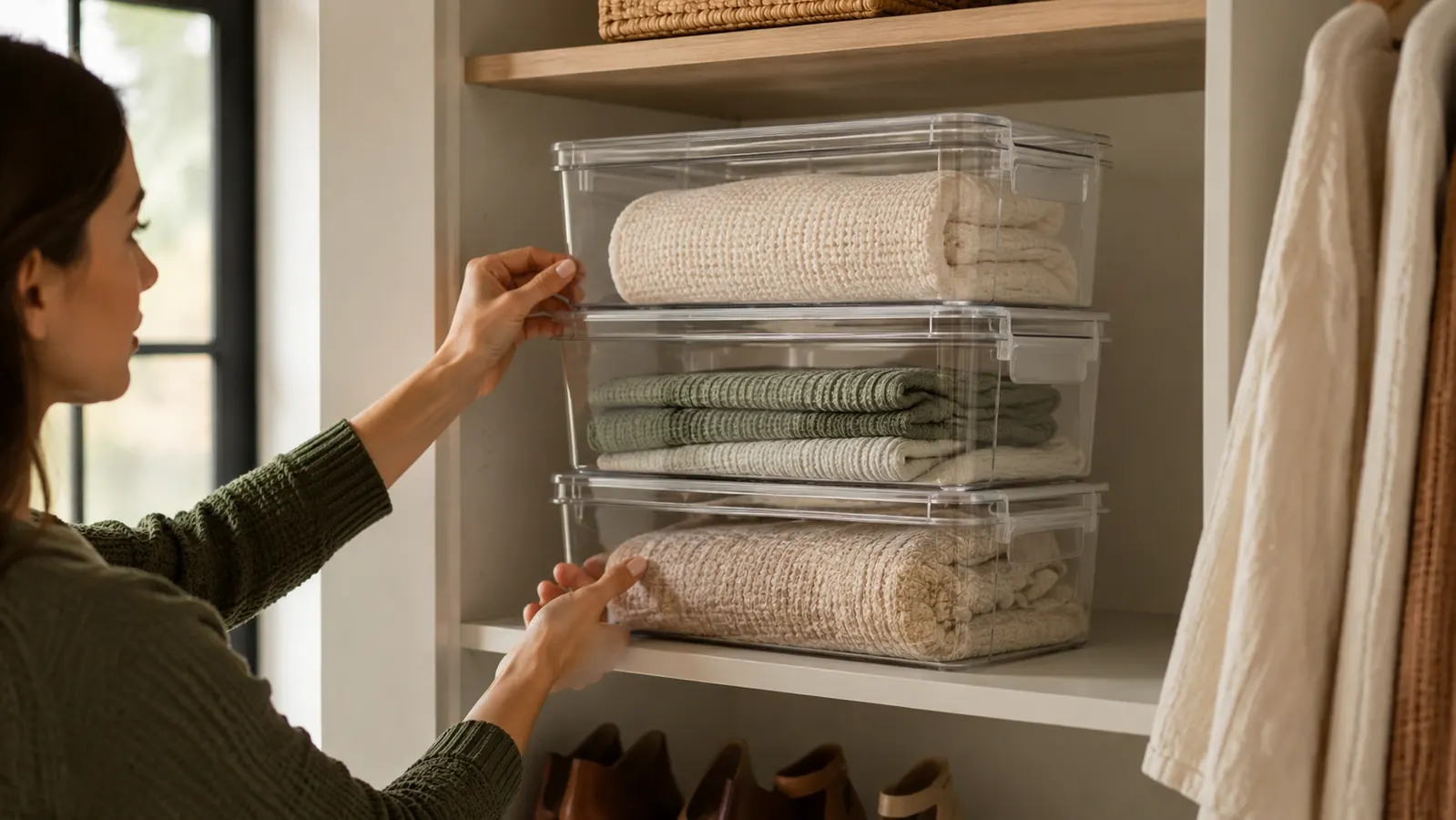
Let me be upfront about something before this review goes anywhere. I have used IRIS USA 54-Qt Stackable Storage Bins on paid organizing jobs. They have earned a permanent spot in my toolkit. And they have also earned a handful of frustrated phone calls from clients who bought them expecting something the listing photos simply do not deliver. Both of those things are true at the same time, which is exactly why a review from someone who has ordered more than a dozen six-packs in the last few years should read differently than the average star rating would suggest.
With over 34,000 Amazon reviews and a 4.0 rating, IRIS USA is the rare storage bin that almost every serious organizer has an opinion on. But the 4.0 average hides a split that matters: a large chunk of five-star ratings from people who got exactly what they needed, and a meaningful cluster of two-star and one-star ratings from people who got a sizing or lid surprise they were not expecting. My job here is to tell you which camp you are likely to fall into before you buy six of them.
The Quick Verdict
A genuinely good stackable bin that earns its rating in the right spaces, but trips up buyers who go by the photos rather than the measurements. Know the external dimensions before you order.
Amazon Check Today's Price →If You Have a Shelf or Closet Floor That Fits These Dimensions, They Are Probably Worth It
The IRIS USA 54-Qt bins stack cleanly, stay clear for years, and hold up in dry storage better than most bins at this price. Just measure first. Seriously.
Amazon Check Today's Price on Amazon →What the Listing Photos Are Not Showing You
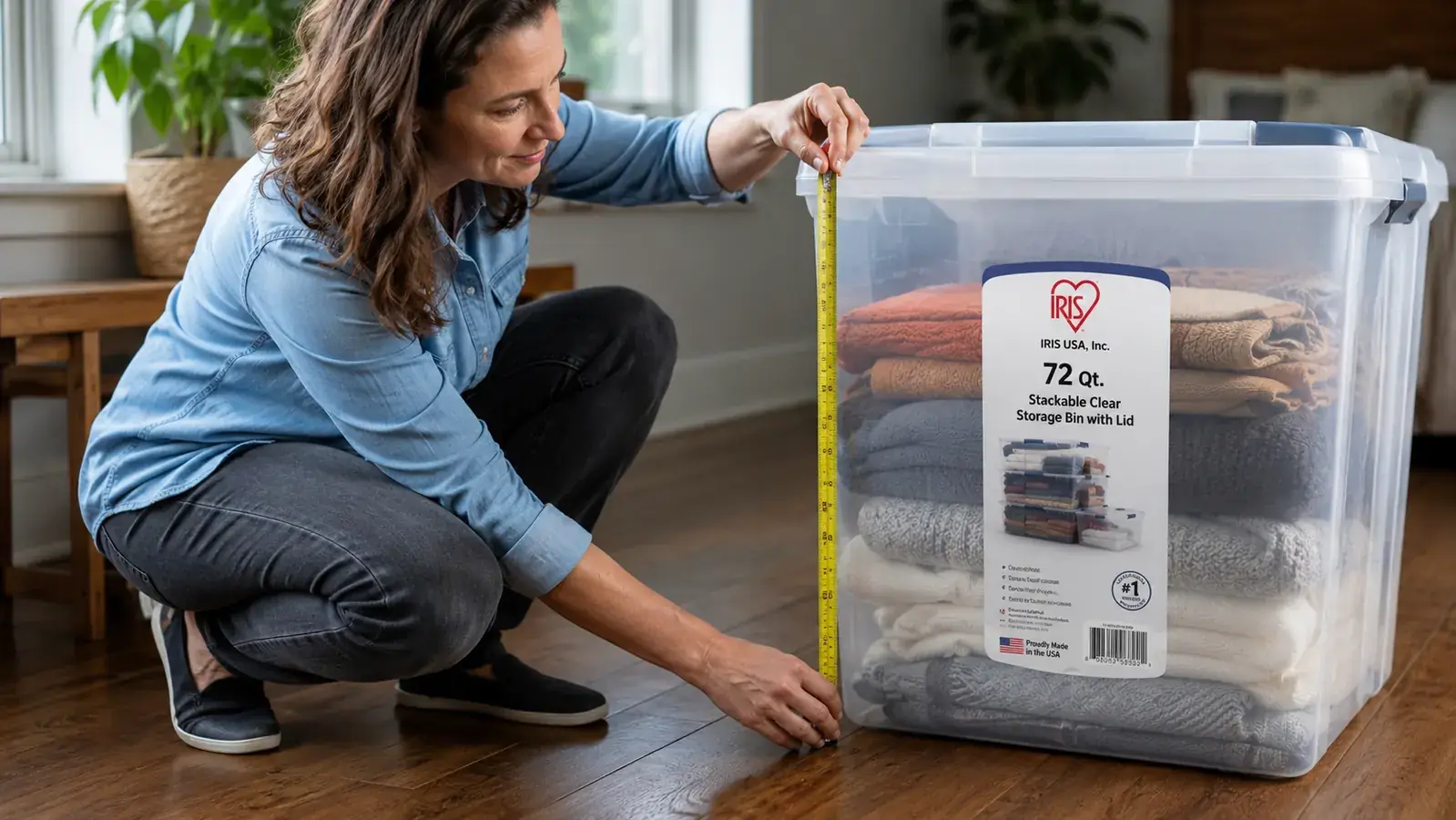
The Amazon photos for these bins are shot in a bright, open storage room with no reference objects in the frame. The bins look sleek, spacious, and perfectly fitted. What those photos do not tell you is that the external footprint of a single 54-Qt bin is approximately 22 inches wide by 16 inches deep by 14 inches tall. That is not a small bin. It is a large bin, and in the real closets I walk into every week, large bins often do not fit where people expect them to.
The single most common buyer regret I hear is a version of this: 'I measured the shelf height but not the shelf depth, and the bin sticks out three inches past the edge.' The product photos show bins sitting neatly on a floor or on very deep shelving. Standard wire shelving in a linen closet or a typical builder-grade bedroom closet runs 12 to 14 inches deep. This bin needs at least 16 inches. That gap is the source of a lot of returns, and it is never mentioned on the listing.
The color of the bins in the listing photos also reads as more neutral than they appear in person. Several reviewers note that the plastic has a faint cool cast that clashes with warmer wood tones or cream-colored shelving. This is not a dealbreaker for a utility closet or a garage. It shows up in spaces where aesthetics matter, like a white or natural-wood pantry where the slight blue-tinted clear plastic can look off against the overall palette.
The Lid Issue That 400 Reviews Mention and the Listing Glosses Over
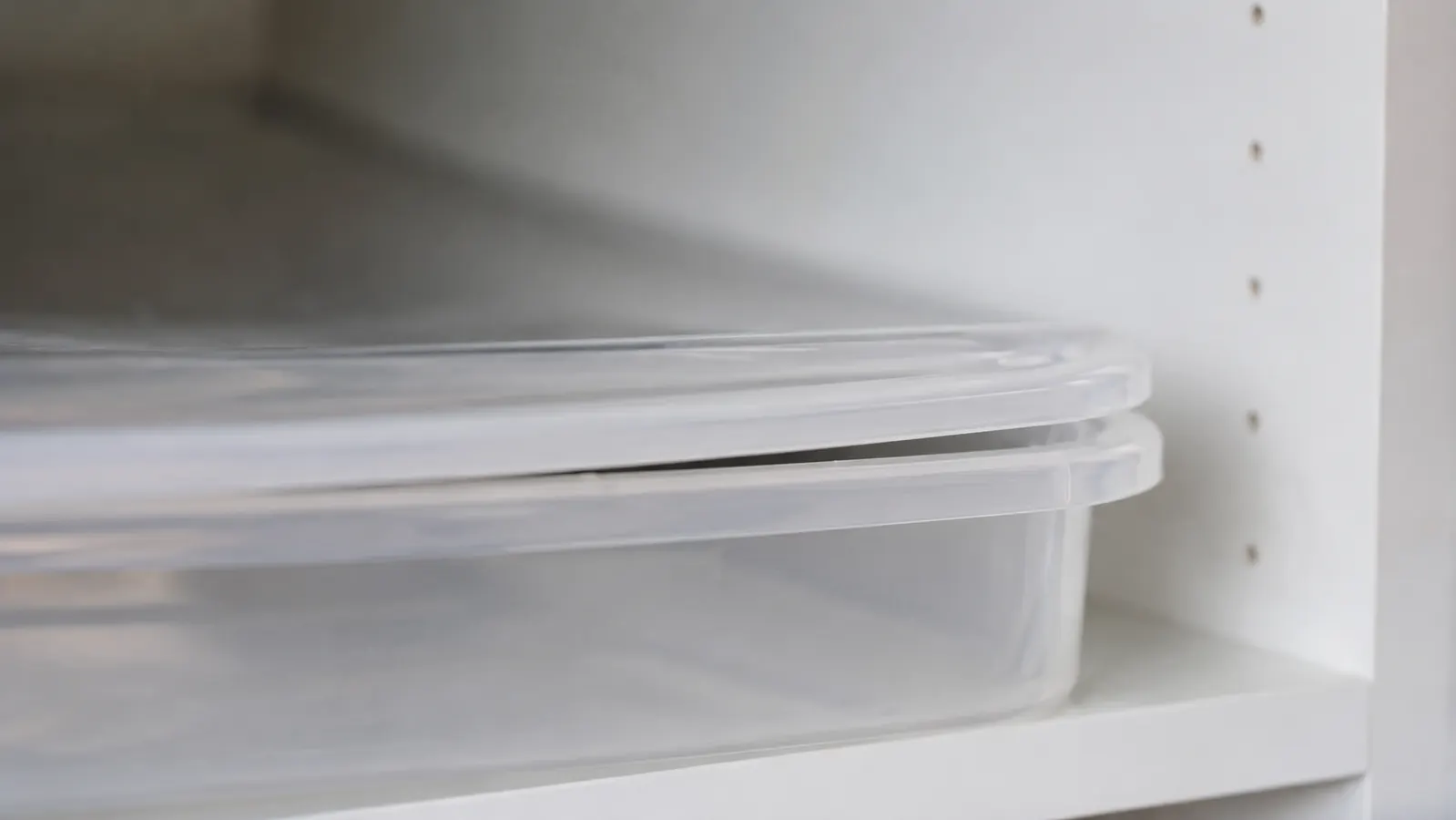
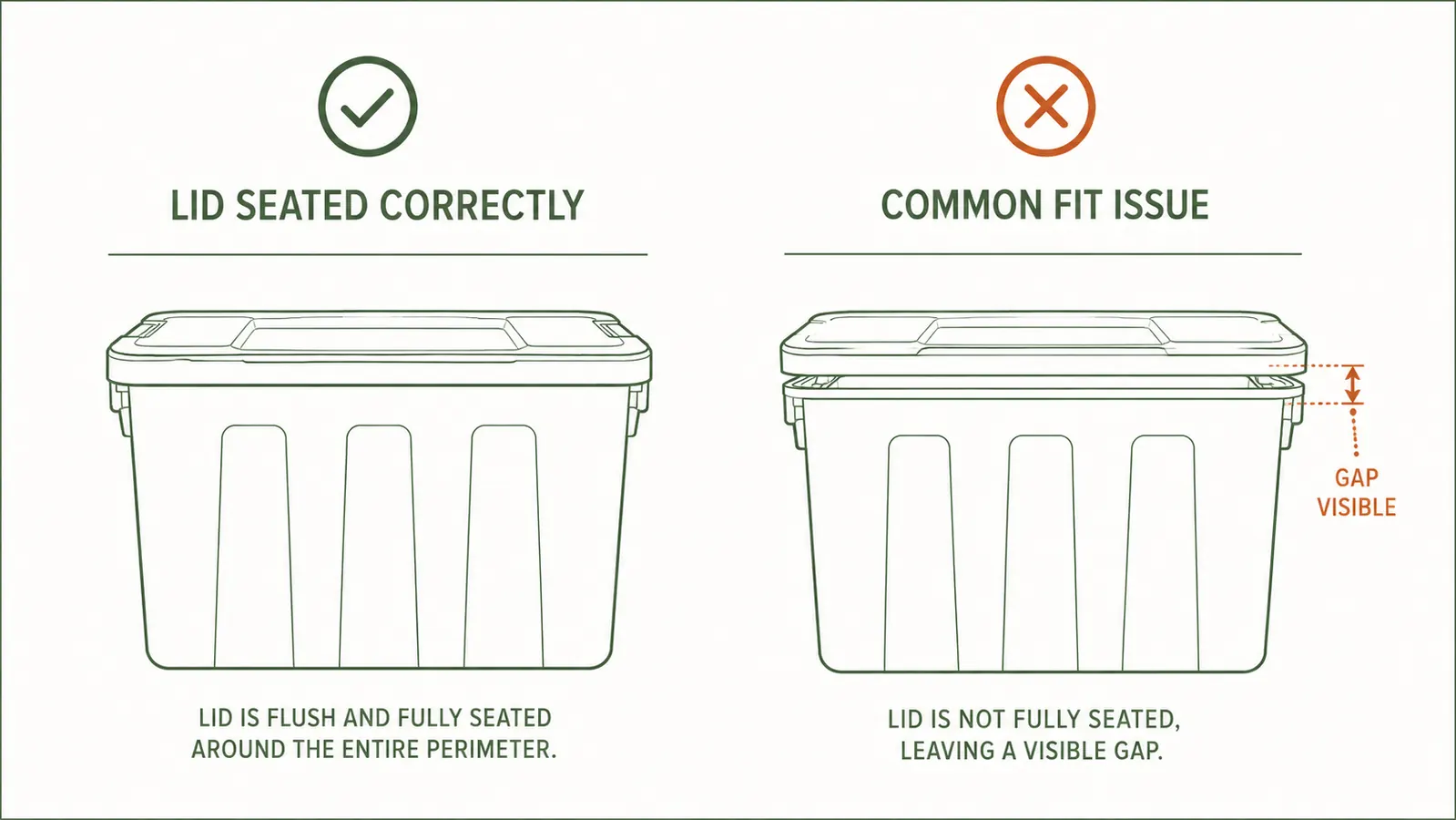
The lids on these bins are designed to click into place and create a semi-secure closure. In practice, the fit is tight when the bins are new and seated correctly. The problem emerges in two scenarios: when the bins are stacked under weight for several months, and when they are stored in a space with temperature swings, like a garage or an unheated basement.
Plastic expands and contracts. The lid on a bin stored in a garage through a hot summer and then a cold winter will not sit as flat as it did on day one. I have seen this in client garages in Florida and in Ohio. The lid does not fall off. It develops a slight bow at the center, which means it no longer clicks fully flush on all four corners. The bin is still functional. Items inside are still protected from dust. But if you are expecting an airtight or near-airtight seal for items like off-season clothing or anything moisture-sensitive, this bin in a garage is not a reliable choice.
The lid does not fall off. It develops a slight bow. In a climate-controlled closet, you will never notice. In a garage with temperature swings, you will notice by year two.
The Sizing Surprises That Cause the Most Returns
I want to walk through the three sizing surprises that show up most often in the negative reviews, because each one is avoidable if you know to check for it.
First: shelf depth. As mentioned above, standard builder-grade shelving runs 12 to 14 inches deep and this bin needs 16 inches minimum. If you have a closet with fixed wire shelving, measure the depth before ordering. The bin will overhang and can tip forward when you pull the lid off, which is a frustration that gets worse over time.
Second: the clear plastic clarity. The bins are marketed as 'clear,' and they are clear enough to see what is inside without opening them. They are not optically clear like glass or like the higher-end clear acrylic containers you see in pantry reveals. The plastic has a slight tint and some surface texture that reduces visibility, especially in low-light closets. For most storage purposes this is fine. If you specifically need to read the spines of books or distinguish between similar-colored items at a glance, the clarity level may frustrate you.
Third: the stacking stability. The bins stack with a molded ridge system that fits one bin on top of another. This works well with up to three bins high in a dry indoor space. At four bins high, the stack starts to feel less stable, and any unevenness in the floor or shelf surface amplifies that. I never recommend stacking more than three of these in client homes. The listing shows stacks of four in what looks like a perfectly level storage room. In the real world, four high is asking for a topple.
Who Returns These Bins and Why
After combing through the one-star and two-star reviews, a pattern emerges. The people who return these bins fall into roughly three groups.
The first group ordered without measuring shelf depth and found the bins did not fit their closet or pantry shelving. This is the most common return reason and it is entirely avoidable. The fix is a tape measure and 30 seconds before adding to cart.
The second group was using them in a garage or outdoor-adjacent space and experienced lid warping after a season. These reviewers are not wrong to be frustrated. The bins are not rated for outdoor use or for temperature extremes, but the listing does not say that clearly. If your storage space is climate-controlled year-round, this group's experience does not apply to you.
The third group received a bin with a cracked corner or a lid that did not seat correctly right out of the box. This happens with any molded plastic product that ships in a large quantity. IRIS USA's customer service has a reasonable reputation for replacements, but shipping damage on large plastic bins is a real risk, particularly if the six-pack arrives as a single heavy box. Check immediately on delivery and photograph anything that looks off before you unpack fully.
Where the Marketing Diverges From Real Use
The marketing for these bins leans hard on 'stackable' as the headline feature, and the stacking does work. But the word 'stackable' implies a degree of permanence and stability that you only get with the right surface and the right height. The bins are also sold as a six-pack, which at first glance seems like great value. In practice, a six-pack requires significant floor or shelf space to store correctly, and many buyers underestimate how much room they are committing to.
The BPA-free claim is accurate and worth noting if you are storing anything food-adjacent or children's items. The clear visibility for finding items without opening is a genuine feature that works as advertised in a well-lit space. Where the marketing stretches things is on the stacking stability claim and on the implied suitability for garage storage. The listing does not say 'garage storage.' But the lifestyle imagery, including photos showing what appear to be garage-style metal shelving and utility spaces, implies it. The gap between that implication and the real performance in a temperature-variable garage is the single biggest source of buyer disappointment.
One more thing the listing does not flag: the lids and the bases are sold as a set, and individual replacement lids are not available through Amazon in a clean, direct way. If you crack a lid, you are either ordering a replacement full bin or living with the cracked one. For everyday closet storage this is rarely an issue. For clients with young kids or heavy regular access, I mention it upfront so there are no surprises down the road.
What I Liked
- Clear enough to see contents without opening in good light
- Stacks solidly up to three bins high on a flat, level surface
- BPA-free plastic holds up well over years of indoor use
- Six-pack pricing makes bulk closet or spare room projects more accessible
- Handles are well-molded and comfortable for moving a full bin
- Lid does click securely when new and in temperature-stable spaces
Where It Falls Short
- External depth of 16 inches does not fit standard 12-14 inch builder-grade shelving
- Lid can bow slightly after one to two seasons in a garage or unheated space
- Four-bin stacks are unstable and increase tip risk on uneven floors
- Clear plastic has slight tint, not optically clear for fine-detail visibility
- Six-pack ships as one heavy box with higher-than-average damage risk in transit
- Replacement lids are not sold separately, so a cracked lid means replacing a full bin
The One Thing Nobody Mentions
Here is what I rarely see in reviews, positive or negative: the weight of the bins themselves. Each 54-Qt bin weighs approximately 3 pounds empty. A full bin of winter clothes or linens can reach 20 to 25 pounds. Moving three stacked bins means lifting the top one off, then the middle, then the bottom, each time you need to access the lowest bin. That is not a design flaw. It is physics. But it is a real consideration for anyone with back issues, limited mobility, or a closet where the bins are not at easy reaching height.
I have had clients who bought six of these, filled them all, and then could not comfortably lift the full top bin off the stack. The solution is to put lighter items in the top bin and heavier items in the bottom, but that requires a planning step most buyers do not take at the time of purchase. If this is a consideration for you, think through what goes in each bin before you fill them. A simple rule: if you cannot lift it comfortably with one hand on each handle, it is too heavy for a position above shoulder height.
Who This Is For
These bins earn their place in a climate-controlled closet, spare bedroom, or finished basement with shelving that runs at least 16 inches deep. They are particularly good for seasonal items you rotate in and out twice a year, off-season clothing sorted by person or category, holiday decorations stored somewhere dry, and craft or hobby supplies that need to stay visible and accessible without taking up floor space. If you have a dedicated shelving unit, a closet with a wide floor, or a finished basement storage area with standard industrial or solid-wood shelving, these bins will do exactly what they promise for years.
Who Should Skip These
Skip the IRIS USA 54-Qt bins if your primary storage space is a garage with real summer heat or winter cold. The lid warping is not severe, but it is consistent enough across reviews that I consider it a predictable outcome rather than a defect. Also skip them if your closet shelving is standard wire at 12 inches deep. The overhanging front of the bin will bother you every time you open the lid, and the tip risk when pulling the lid off on a shallow shelf is real. And skip them if you need to stack four or more high in a space where anything could bump the stack. Three high, stable surface, climate-controlled room: yes. Four high, garage floor, near a door that swings open: no. Look at a smaller 15 to 20 quart bin instead if your shelving is shallow.
If you want to compare these bins against a competing option before deciding, my side-by-side look at IRIS USA vs Sterilite Storage Bins covers the key differences in lid design, price per bin, and which one holds up better in real homes. And if you are planning a full closet overhaul, my step-by-step closet organization method walks through exactly how to decide how many bins you need and where to position them for a system that actually sticks.
Measure Your Shelf Depth First, Then Decide
If your space works for them, the IRIS USA 54-Qt bins are a solid buy for indoor climate-controlled storage. Check the current price and available configurations on Amazon before adding to cart.
Amazon Check Today's Price on Amazon →